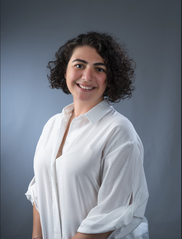
About Deniz Baloglu
I support families and schools as they navigate the educational and developmental questions that can accompany giftedness and twice-exceptionality. My work is grounded in a simple principle: children are better served when the adults around them understand the full pattern of their strengths, needs, experiences, and environment—not only a label or a score.
Why I Do This Work
Families often enter the world of gifted education because something about their child does not fit conventional expectations. The child may learn with unusual speed or depth, seem intensely curious, struggle in an environment that appears appropriate on paper, or present a confusing combination of advanced ability and genuine difficulty.
Parents may receive fragmented information from schools, evaluators, specialists, and enrichment programs and still be left asking what it all means for their particular child. I created Navigator of Giftedness to help families organize that information, ask better questions, and make thoughtful decisions without reducing the child to a single explanation.
How I Work
My approach is collaborative, strengths-based, evidence-informed, and practical. I consider available assessment data, educational history, developmental patterns, the child’s interests and daily experience, family priorities, and the realities of the educational setting.
I do not begin with a predetermined solution. A change of school, acceleration, additional support, or enrichment may be valuable for one child and inappropriate for another. The goal is to understand the individual learner and identify the conditions most likely to support meaningful learning and well-being.
Featured Interview
Supporting Gifted Learners: A Conversation with Deniz Baloglu, Parent Guide and Consultant
In this interview with Pacific Preparatory, I discuss some of the educational challenges gifted learners and their families encounter, including the need for depth rather than simply faster pacing, the importance of finding the right mentors, and the value of personalized learning environments. I also share how I help families consider school fit, enrichment, and the child’s broader educational ecosystem.
READ THE INTERVIEW
Education and Professional Training
I hold a Professional Academic Certificate in Twice-Exceptional Education from Elmbridge University’s program in Cognitive Diversity in Education. My additional education and training include developmental psychology, assessment tools, and parent coaching. I am also a trained Supporting Emotional Needs of the Gifted (SENG) facilitator.
Professional Involvement
I serve on the Parent Editorial Content & Advisory Board of the National Association for Gifted Children (NAGC) and am a member of the California Association for the Gifted (CAG) Independent School Advisory Council. I also previously served on the CAG Board. Through ongoing professional learning, community engagement, presentations, and collaboration with other professionals, I remain actively connected to current developments and conversations in gifted and twice-exceptional education.
Professional An Analytical Perspective
Before focusing my work on gifted and twice-exceptional education, I worked in data analysis and business intelligence. I hold a master’s degree in Information Technologies. This background influences how I approach complex learner profiles: I look for patterns, consider multiple sources of information, distinguish data from assumptions, and avoid drawing broad conclusions from a single measure.
Professional Chess and Strategic Thinking
I began playing chess at age four and was a member of the Turkish National Chess Youth Team. Chess shaped my approach to observation, strategy, and problem-solving and taught me to consider both immediate decisions and the larger system in which they occur.
Based in the San Francisco Bay Area
I live with my family in the San Francisco Bay Area and work with families, schools, and organizations locally and through virtual consultation. My work has a particular focus on early childhood and elementary school concerns, while consultation may also be appropriate for families and educational communities working with older learners.
Why I Do This Work
Families often enter the world of gifted education because something about their child does not fit conventional expectations. The child may learn with unusual speed or depth, seem intensely curious, struggle in an environment that appears appropriate on paper, or present a confusing combination of advanced ability and genuine difficulty.
Parents may receive fragmented information from schools, evaluators, specialists, and enrichment programs and still be left asking what it all means for their particular child. I created Navigator of Giftedness to help families organize that information, ask better questions, and make thoughtful decisions without reducing the child to a single explanation.
How I Work
My approach is collaborative, strengths-based, evidence-informed, and practical. I consider available assessment data, educational history, developmental patterns, the child’s interests and daily experience, family priorities, and the realities of the educational setting.
I do not begin with a predetermined solution. A change of school, acceleration, additional support, or enrichment may be valuable for one child and inappropriate for another. The goal is to understand the individual learner and identify the conditions most likely to support meaningful learning and well-being.
Featured Interview
Supporting Gifted Learners: A Conversation with Deniz Baloglu, Parent Guide and Consultant
In this interview with Pacific Preparatory, I discuss some of the educational challenges gifted learners and their families encounter, including the need for depth rather than simply faster pacing, the importance of finding the right mentors, and the value of personalized learning environments. I also share how I help families consider school fit, enrichment, and the child’s broader educational ecosystem.
READ THE INTERVIEW
Education and Professional Training
I hold a Professional Academic Certificate in Twice-Exceptional Education from Elmbridge University’s program in Cognitive Diversity in Education. My additional education and training include developmental psychology, assessment tools, and parent coaching. I am also a trained Supporting Emotional Needs of the Gifted (SENG) facilitator.
Professional Involvement
I serve on the Parent Editorial Content & Advisory Board of the National Association for Gifted Children (NAGC) and am a member of the California Association for the Gifted (CAG) Independent School Advisory Council. I also previously served on the CAG Board. Through ongoing professional learning, community engagement, presentations, and collaboration with other professionals, I remain actively connected to current developments and conversations in gifted and twice-exceptional education.
Professional An Analytical Perspective
Before focusing my work on gifted and twice-exceptional education, I worked in data analysis and business intelligence. I hold a master’s degree in Information Technologies. This background influences how I approach complex learner profiles: I look for patterns, consider multiple sources of information, distinguish data from assumptions, and avoid drawing broad conclusions from a single measure.
Professional Chess and Strategic Thinking
I began playing chess at age four and was a member of the Turkish National Chess Youth Team. Chess shaped my approach to observation, strategy, and problem-solving and taught me to consider both immediate decisions and the larger system in which they occur.
Based in the San Francisco Bay Area
I live with my family in the San Francisco Bay Area and work with families, schools, and organizations locally and through virtual consultation. My work has a particular focus on early childhood and elementary school concerns, while consultation may also be appropriate for families and educational communities working with older learners.
If you are looking for guidance for your family or consultation for your school, I invite you to get in touch.